

THE STRAIT OF
HORMUZ CRISIS
Why the world’s most dangerous chokepoint is under stress right now — and why India’s energy security could feel the impact. A complete GS-1 (Geography) + GS-2 (IR) study thread. 📍
Normally Transits
Petroleum Liquids Trade
Exposed to Gulf Route
of the Strait
GS-1 GEOGRAPHY: What & Where is the Strait of Hormuz?
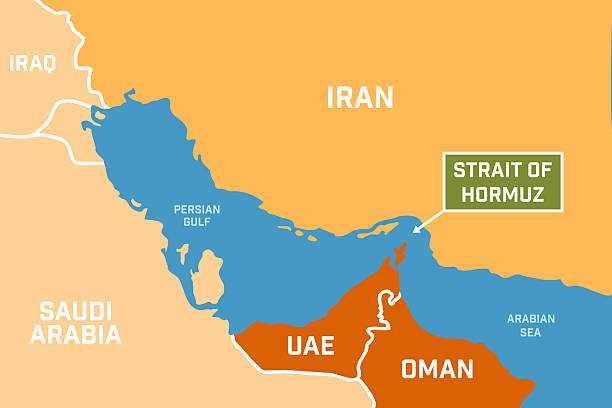
The Strait of Hormuz is a narrow waterway connecting the Persian Gulf to the Gulf of Oman and then to the Arabian Sea. It is flanked by Iran to the north and the UAE + Oman to the south.
Width at narrowest: ~33 km | Usable shipping lanes: about 3 km wide each way | Between Iran, Oman and UAE | One of the world’s most important maritime chokepoints.
The strait links the oil-rich Persian Gulf to the wider Indian Ocean. That is why it is not just a map feature — it is a classic example of how physical geography shapes geopolitics.
World’s Biggest Oil Chokepoints — Hormuz vs Others
Current Context: Why Hormuz is Back in the News Current Affairs
Rising tensions in West Asia have revived fears over the security of shipping in the Strait of Hormuz. Even the possibility of disruption causes immediate concern in global energy markets.
Iran lies along the entire northern shore of the Strait and possesses significant naval reach in the region. That gives it enormous strategic leverage during crises.
India’s Stakes: Energy, Diaspora & Diplomacy GS-2 IR
India is highly exposed to instability in this region. The impact is not only on oil, but also on diplomacy, inflation and diaspora welfare.
The major exporters linked to this corridor include Saudi Arabia, Iraq, UAE, Kuwait and Qatar. Hence, any prolonged disruption can affect fuel prices, inflation, current account balance and India’s growth outlook.
India also has to maintain a careful balance between ties with Iran, the Gulf monarchies, Israel, and the United States. This makes Hormuz a classic case of strategic autonomy in foreign policy.
All GS Concepts Linked — Build Your Answer
Mains Answer Framework (250 Words)
“The Strait of Hormuz crisis reveals India’s energy vulnerability. Examine the implications of instability in West Asia for India’s strategic interests.”
Quick Revision Firewall — Prelims Facts
🔹 Hormuz connects Persian Gulf → Gulf of Oman
🔹 Iran lies to the north; Oman/UAE to the south
🔹 Narrowest width: about 33 km
🔹 Daily oil transit: about 21 million barrels
🔹 One of the world’s top oil chokepoints
🔹 Vital for India’s energy security
🔹 Important nearby point: Bandar Abbas
🔹 Key linked countries: Saudi Arabia, Iraq, UAE, Kuwait, Qatar
🔹 Related concept: Freedom of navigation
🔹 Related project: Chabahar Port
🔹 Compare with Bab-el-Mandeb and Malacca
🔹 Strong topic for GS-1 + GS-2 + GS-3
